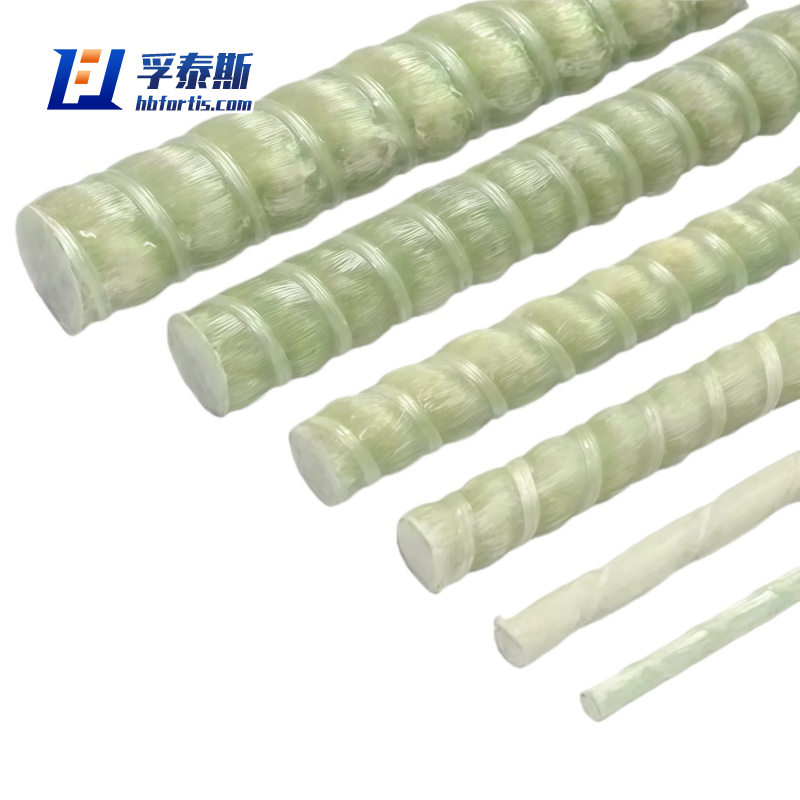
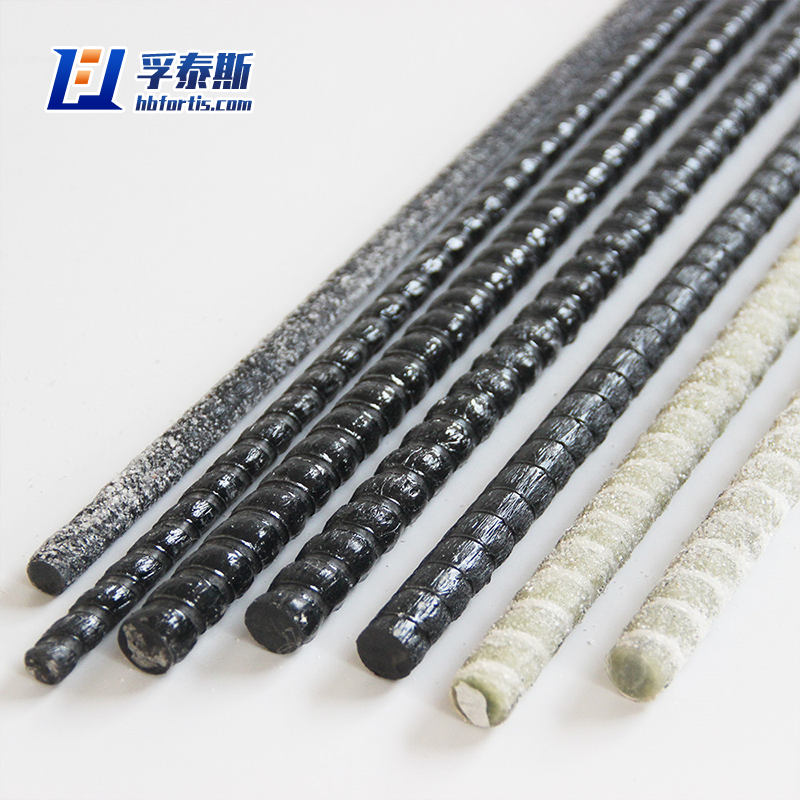
As a premier China-based exporter and factory-direct supplier of FRP rebar (fiberglass reinforced polymer rebar), we manufacture high-quality GFRP reinforcement rods engineered to outperform traditional steel in corrosive and demanding environments. Our pultruded FRP bars feature glass fiber content exceeding 70% with vinyl ester resin matrix, delivering tensile strengths up to 1000 MPa at just 1/4 the weight of steel, with 100% corrosion resistance eliminating the need for cathodic protection or coatings. Ideal for marine structures, coastal bridges, water treatment plants, chemical facilities, tunnel segments, and MRI-sensitive environments requiring non-magnetic reinforcement, our FRP rebar ensures 75+ years of service life with zero maintenance costs. We offer diameters from 4mm to 25mm, customizable lengths, sand-coated or ribbed surface treatments, and full compliance with ASTM D7957, CSA S807, and EN 14780 standards. With 20-35 days lead time, competitive factory pricing, T/T and L/C payment options, and complete export documentation, we provide a turnkey procurement solution for contractors, engineers, and infrastructure developers worldwide.

Hebei Fortis Technology Co., Ltd Produktbroschüre
Product Advantages
1. Unmatched Corrosion Resistance – The Ultimate Steel Alternative
Unlike traditional steel rebar that rusts and spalls concrete in chloride-rich or alkaline environments, FRP rebar is entirely inert to corrosion. Made from high-grade E-glass fibers embedded in a vinyl ester or epoxy resin matrix, our FRP bars resist saltwater, de-icing chemicals, acidic soil, and wastewater chemicals with zero degradation. This eliminates the need for expensive epoxy coatings, cathodic protection systems, or stainless steel upgrades, making it the definitive choice for marine piers, coastal bridges, water treatment plants, and highway structures exposed to harsh weather conditions.
2. Exceptional Strength-to-Weight Ratio – Easier Handling, Faster Installation
Our FRP rebar weighs only one-quarter that of steel rebar (density of 1.9–2.1 g/cm³ versus 7.8 g/cm³ for steel), yet delivers tensile strengths of 600 to 1,000 MPa – exceeding standard steel grades. This lightweight property dramatically reduces transportation costs, allows easier on-site handling with fewer laborers, cuts crane and lifting equipment requirements, and accelerates installation cycles. Workers can carry and place longer bars manually, reducing fatigue and boosting overall project productivity by up to 30%.
3. Perfect Thermal Compatibility – Minimizing Concrete Cracking Risks
FRP rebar exhibits a coefficient of thermal expansion (CTE) closely matched to that of concrete (approximately 8–12 × 10⁻⁶/°C), unlike steel which has a much higher CTE (around 12–17 × 10⁻⁶/°C). This near-identical thermal behavior ensures that temperature fluctuations do not create internal stresses between the rebar and the surrounding concrete matrix, significantly reducing the risk of micro-cracking, delamination, and premature structural failure – a critical advantage for bridge decks, tunnel linings, and freeze-thaw cycling environments.
4. Non-Magnetic and Electromagnetically Transparent – Ideal for Sensitive Facilities
FRP rebar is completely non-conductive and non-magnetic, making it the only safe reinforcement solution for MRI suites in hospitals, research laboratories, high-voltage electrical substations, and sensitive military or aerospace facilities. Unlike steel, FRP bars do not interfere with electromagnetic fields, radar signals, or precision instrumentation, allowing designers to achieve robust structural integrity without compromising operational accuracy or safety in electromagnetically sensitive zones.
Verwandte Produkte

FRP Profiles Handrail for Wastewater Treatment Plants China Exporter
China exporter of FRP profiles handrail for marine walkways, mining sites, and cooling towers. Factory-direct supply, custom sizes, fast export delivery. Inquire now.

FRP Profiles Handrail Manufacturer for Offshore Platforms Chinese Exporter
Factory-direct FRP profiles handrail exporter. Corrosion-proof fiberglass railing for chemical, marine & offshore use. Custom pultrusion, bulk supply, fast shipping.

FRP Handrail Supplier for Chemical Plants | Direct Sales from Chinese Factory
Factory-direct FRP handrail exporter. Fiberglass handrails for chemical plants, offshore platforms & wastewater treatment. Custom sizes, bulk supply, fast quotes.

FRP Pultruded Profiles Exporter | Fiberglass Structural Shapes for Walkways Platforms
Reliable Chinese supplier of FRP pultruded profiles offers lightweight, non-slip fiberglass channels and angles. Ideal for industrial flooring, ladder systems, and utility enclosures. Factory prices with global shipping. Inquire now.
Kontaktieren Sie uns umgehend, um die Anforderungen Ihres Produktprojekts zu besprechen.
Navigation
Navigation
Kontaktieren Sie uns
Tel.: +86 189 3266 2725
E-Mail: sale@hbfortis.com
Hinzufügen.: Nr. 8-1, Zhenxing Street, Stadt Matun, Kreis Zaoqiang, Stadt Hengshui, Provinz Hebei
Nehmen Sie Kontakt auf
Nehmen Sie Kontakt auf